
D’var Torah – December 12
| Shabbat Shalom! I pray this email finds you all well. |
|
Let’s imagine that there’s this company, and it could be any sort of business you want…an accounting firm, an HVAC contractor, a drywall installation group…you name it. Well, the boss, he has his favorite employees. Maybe his favorites go to the same church, synagogue, mosque, or temple as him, maybe they all went to the same college or high school, or maybe they like the same type of music or hobbies. The boss makes no secret of his bias, giving his preferred workers the best clients, the cushiest assignments, or easiest schedules and routes, whether they’ve earned them or not. The other employees, as you can imagine, grow frustrated and embittered. No matter how much blood, sweat, and tears, overtime and energy, and spirit and conviction they pour into the company, it seems their efforts go unnoticed and unrewarded. So eventually, they do what you would expect anyone else to reasonably do: some quit and go over to competitors where they know their talents will be appreciated, while others do the bare minimum to keep their jobs. One day, the boss looks at his company’s quarterly earnings statement and is shocked to see a precipitous drop in revenue. The worst part is that he doesn’t even understand why.
This story is one which we’ve probably all heard before, and one which many of us have even experienced. In truth, it’s as old as time itself. In fact, it’s the basis of this week’s parsha of Vayeishev(Genesis 37:1-40:23).
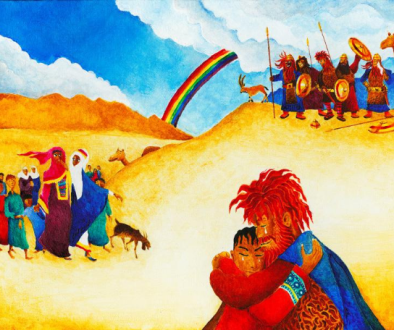
Jacob shows extreme deference to Joseph, the son of his one true love Rachel. He makes a palpable demonstration by gifting Joseph a multicolored tunic, much to the displeasure of his brothers(Genesis 37:3-4). Joseph puts their already bubbling jealousy into full overdrive when he tells them dreams in which they bow down before him (Genesis 37:5-9). In the end, the brothers throw Joseph into a pit and sell him into slavery (Genesis 37:23-28).
Cain and Abel, Isaac and Ishmael, Jacob and Esau, and now Joseph and his brothers. It seems that almost every generation in Sefer Bersheit (Genesis) is affected and even driven by favoritism and jealousy, thus causing friction, division, disintegration and open conflict.
The question begs: is this toxic favoritism inevitable? Are we all bound to be consumed by it?
The answer is an interesting “yes” and “no”.
Yes – we are bound to have inherent biases. We will always have people, places, you name it, that we will prefer over others. Conversely, there will be those people, places, etc., that aren’t to our liking.
This is where the “no” comes in. Just because we have a job applicant in front of us whose dad went to college with our dad, roots for the same teams we do, and likes the same music as we do does not mean that they’re the best candidate to handle dozens of tax returns, install an HVAC on a deadline, or hang drywall without much supervision. The candidate with the best resume could very well be the one who loves our college’s arch-rival and listens to music that we’d never turn the dial to.
Ignoring our inherent biases and preferences in favor of meritocracy, skills and training, pragmatism, and practicality is not only a middah(moral value) but also a facet of psychological and ethical self-discipline and a key element of introspection.
Rabbi Judah ben Bathyra counseled, “Honor children of the ignorant: Torah may issue from them;” the poet Berekia HaNakdan wrote, “Love equally all your children. Sometimes the favored disappoint, and the neglected make you happy;” and Rabbi Eleazar ben Azariah taught, “Play no favoritism: because Joseph got a multi-colored coat, the brothers ‘hated him.’”[1]
Bizrat HaShem, with God’s help and guidance, may our judgments of others in life be guided by impartial merit and skill, may we know and recognize our biases, and may we be able to blunt their impact on our decisions.
|
|
Wishing you all a Good Shabbos and a great weekend.
|
| Bivrakha, |
|
Rabbi Aaron
|